


By Anne Borges over at Buzzfeed.
Feeling these today, especially the first. Haven't been sleeping well.
Appalled not just by the inhumane living conditions, innate structural violence and abusive treatment of mostly female patients -- those were the days in which lesbianism, menopause, hysteria and even deviating from societal norms of femininity, could get you a lifetime's stay in an institution -- she began to see that once a patient was admitted to a facility, there was no expectation that even treatable mental illnesses could or would be cured, and so hardly anyone ever was. All the while, these vulnerable patients were treated deplorably, often abused and eventually abandoned by the families, and mostly male family members, who institutionalized them.It isn't hard to imagine all the ways in which women could be dismissed from their lives through inane concoctions as tools of direct oppression. In the Huffington Post piece, Emily Lanigan, a writer who is a member of the Friends of Rockhaven historical society, talks about the role of Rockhaven, as part of a narrative:
"Rockhaven is a really important part of women's history, feminist history and mental health history... Even in our current landscape of women with mental health issues still being marginalized and dismissed as 'hysterical,' the value of Rockhaven's story can't be quantified."This isn't unlike what we're living in now, this two-tiered system where private health care is a cut above public health care. The women at Rockhaven were moneyed and white. But what of anyone else? What about the rest of us? Forget 1923. It's 2015 and the system is shit.
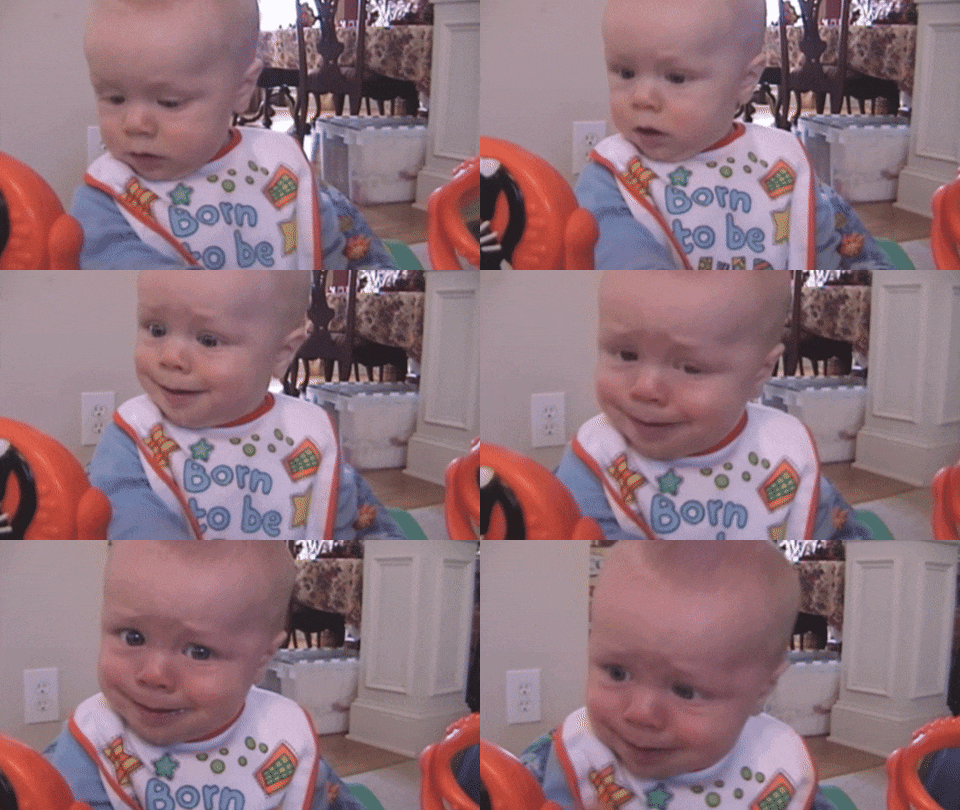
Every day after the first step down was a struggle to get out of bed. I was often nauseated and I suffered from constant “brain zaps” whenever I moved my head, a phenomenon described by people withdrawing from SSRIs as an electric buzz or a shock. I couldn’t pay attention at work and cancelled any social interaction in favour of sleeping. It was almost like being depressed again but worse, because short of going back on the antidepressants and delaying the inevitable, there was nothing I could do to control the withdrawal symptoms.Referred to as SDS (SSRI Discontinuation Syndrome) Stortz refers to an Italian/American study that shows SSRI withdrawal is worse that initially assumed.
The review showed that SDS can happen regardless of the type of SSRI. Furthermore,
gradually weaning off the drug doesn’t diminish the chances of discontinuation syndrome. Symptoms, which include nausea, rapid heart rate, and hallucinations, usually last a few weeks but can persist up to a year.
...
I wish there had been more dialogue surrounding SSRI withdrawal so I had known what to expect, however. At no time did the doctor who put me on the SSRI discuss possible withdrawal symptoms, nor did the doctor who took me off the SSRI. Without that full disclosure, I was totally blindsided by the withdrawal symptoms, the severity of which is potentially dangerous for a person with previous mental health issues. If I didn’t have such a strong support system and even stronger Google skills to figure out what was going on, I would have likely assumed SDS was just what real life was like after SSRIs and either resumed SSRIs indefinitely or fallen back into my old withdrawn, anhedonic habits.Seriously though. You hear "zapping." That isn't a reassuring experience for someone dealing with their mental health.


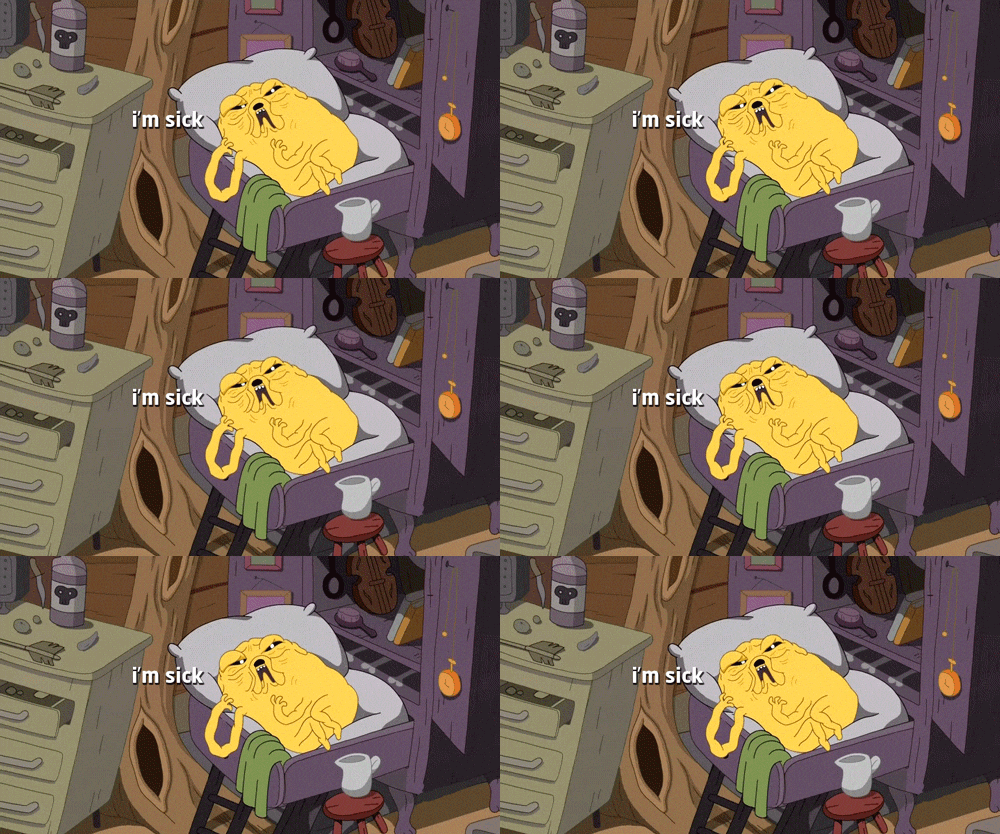
So that’s what I have: a low-grade, persistent depression that rears its head now and again. I don’t really think about it much. I maybe have five to 10 total days a year where I’m affected by this particular issue—it’s hard for me to be precise because I’ve only had treatment for any of this north-of-the-neck stuff for about a year (#ThanksObama) and it’s all affected by life circumstances as well as brain chemistry. That’s part of the fun—mental illness is mostly unpredictable, even if it’s the sort that can be mitigated.Mental illness often lives in an unpredictable space yes, but the way it continues to inform your decisions in a "what if?" "better be safe than sorry" takes shape in the form of self-diagnosed limitations and worst case scenario planning.

After I posted about my sick day, supportive comments rolled in across social media. Some from family and friends who deal with illnesses of their own and appreciated my making a point of not just taking a sick day, but describing it as such. It felt warm and validating, like a fuzzy blanket, as I rightfully gave my body a break.
Then I caught a comment congratulating me for exercising “self care” and was jarred awake.
Self care—while an extremely important part of activism, working for yourself, and any profession that requires you do emotional work—had nothing to do with my sick day. It felt condescending and incorrect. I had an actual physical response to seeing the words.
Wine is self care. Reading a book is self care. Hiking in nature is self care. A massage is definitely self care.
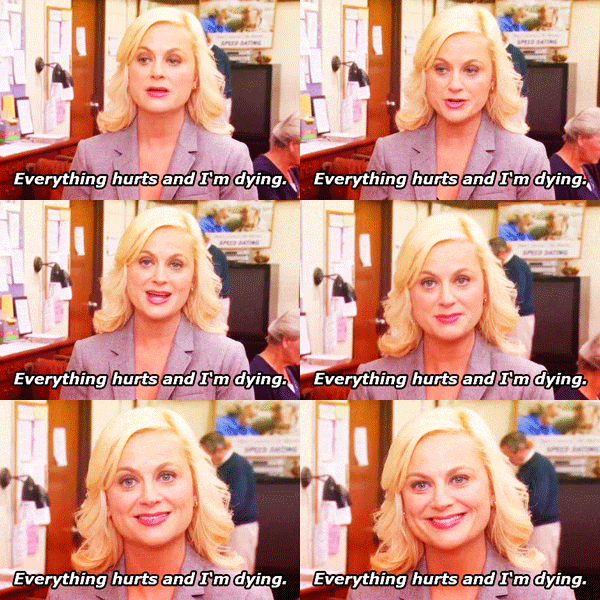
Me spending the majority of a 48-hour stretch in bed unable to function? That’s not self care. That’s called being sick.
And when you call it self care, you’re downgrading what I’m going through to a level you are comfortable with. Because you aren’t comfortable picturing me with a mental illness. That’s your issue and I don’t appreciate having it projected onto me. I am not here to make you feel comfortable with my illness.
...
When you mischaracterize what I’m going through for your comfort, you are absolutely invalidating the work I do every day to get well AND asking me to do the additional emotional labor of hiding my illness so you don’t get any of it on you. People who deal with chronic illness, long-term poverty, or both already do a massive amount of that labor to keep things hidden—not necessarily for their own comfort, but for yours. Asking more of them is greedy. So stop it.
Now, lest I be misunderstood . . . yes, OF COURSE, people with chronic conditions need to exercise self care. We should do SO MUCH of it. Like every day. It should be on our calendars like required tasks.
Here’s the difference: it’s something we should be doing to prevent sick days.I seem to basically be quoting the entire article. Please see the original.




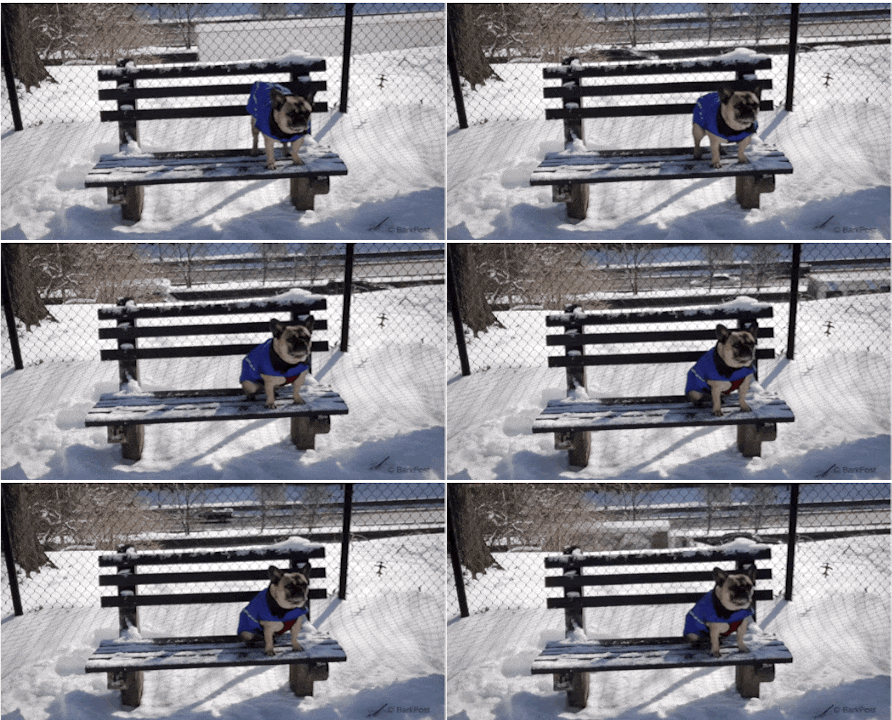
For me, the fact that I didn’t have to pretend or explain myself around my dog was the most incredible gift. A dog never asks “Why?” I could be as sad as I wanted to be around Bunker and he didn’t care. He just accepted me.That's true. Though when I was very depressed and a dog owner, I often felt guilty about not taking the dog out. She'd sometimes look at me and sigh, which was, well, brutal.
I could be a complete sobbing mess and my dog would calmly sit with me, maybe roll over and ask for a belly rub, maybe bump his big butt on mine. All of those actions always felt like a, “Hey, I’m here. Just so you know."From what I understand, golden retrievers are magical dogs made of pure light.
And then there are the things we can’t explain, like when we’re in a room alone, feeling bad, and the dog is all the way across the house, but he still comes trotting down the hallway and peeks his head around the door, his eyebrows, so concerned, say, “Person? You ok? Did you forget that I love you?”That's the good stuff. That a dogs' needs are simple enough, and that they align with a basic schedule of taking care of yourself. Food. Walk. Fresh Air. Maybe some play. Some cuddles. A friend.


If you are deemed to be heavy, on the other hand, you suffer, as a 2011 study made clear. Heavy women earned $9,000 less than their average-weight counterparts; very heavy women earned $19,000 less. Very thin women, on the other hand, earned $22,000 more than those who were merely average. And yes, those results are far more visible on women’s earnings than on those of men.This is of course, on top of the regular old-hat criticism and fat-phobia you receive on a daily basis. So I'm likely making 22,000$ less a year than my thin friends. I'm assuming there's the correlation that my body size also means I'm lazy. It definitely means less people want to fuck me so I guess that makes me less quantifiable; less interesting.


